Books thatbalance
Double-entry accounts kept for you from every document, with the ledger, day book and statements Tally users know.
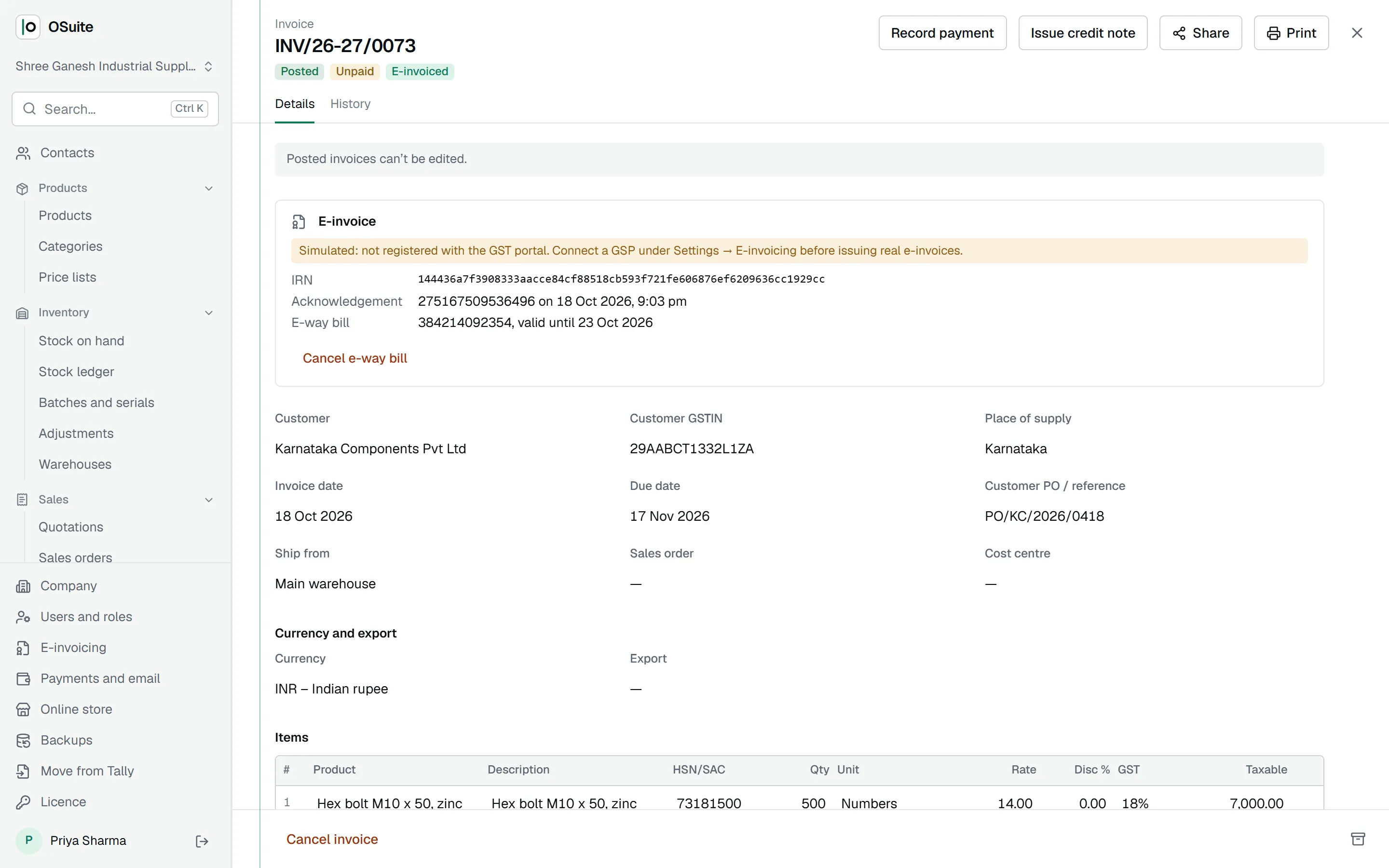
Every document posts its own entry.
Invoices, bills, payments, notes and stock adjustments each post a balanced journal entry to a chart of accounts made for Indian businesses. Manual journals cover salaries, rent and depreciation. An entry that does not balance is refused.
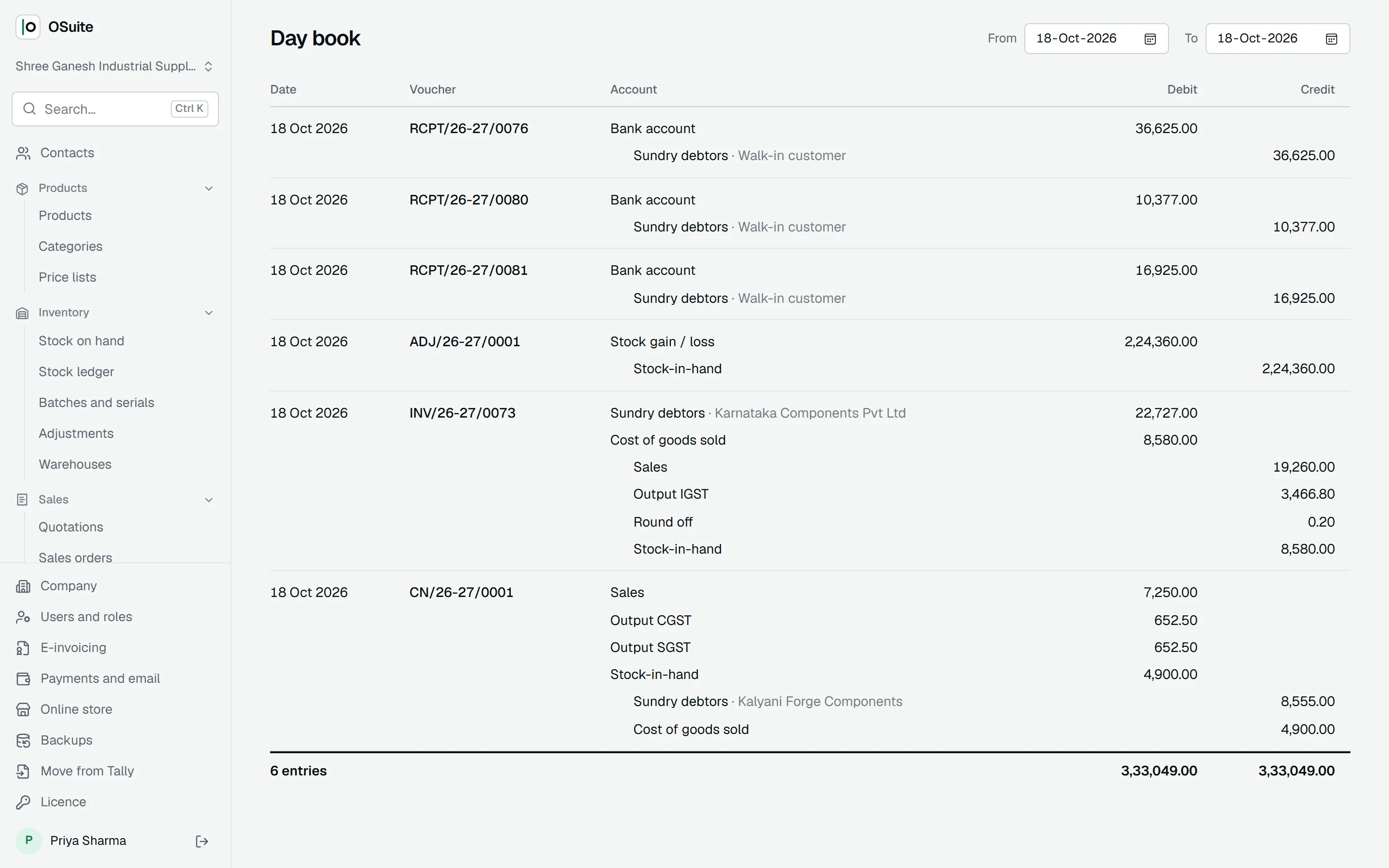
Ledger, day book, the familiar names.
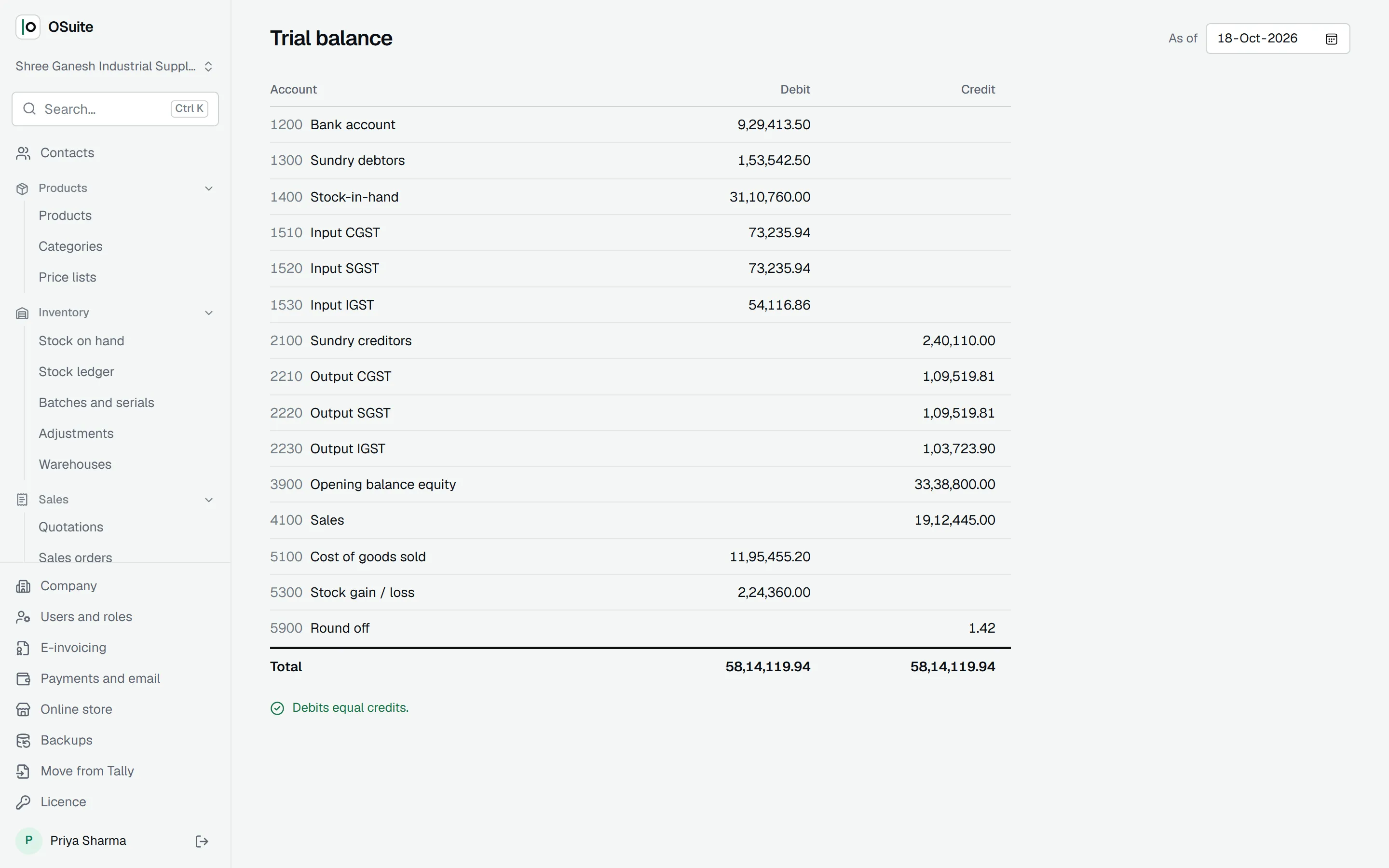
Open any account’s ledger with its opening balance and a running Dr/Cr balance; every voucher links to its document. The day book lists every entry of the day. The trial balance, profit and loss and balance sheet drill into the ledger.
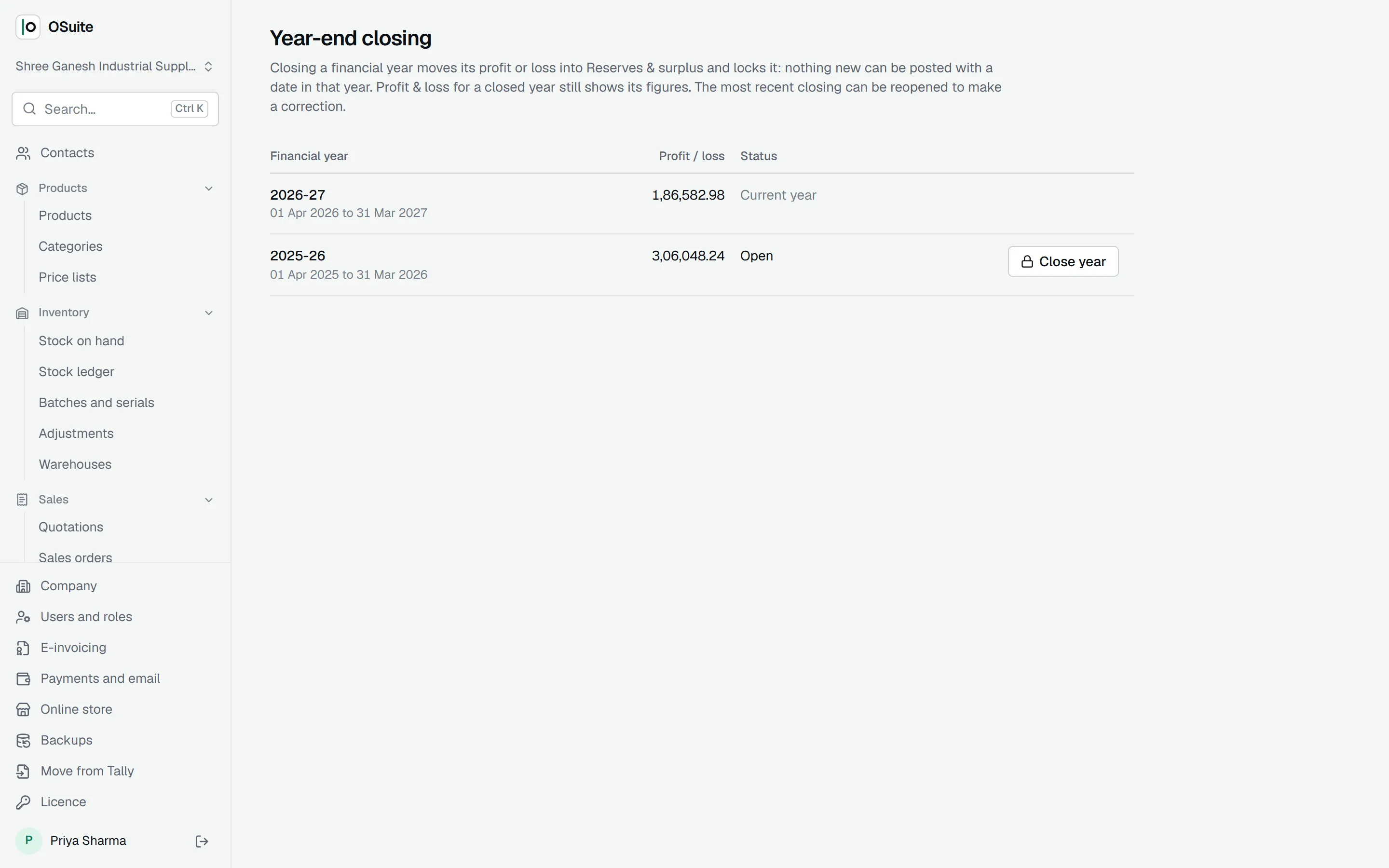
Close the year, lock it.
At the end of the financial year, OSuite moves the year’s profit to reserves and locks it: nothing can be posted with a date in a closed year. The most recent closing can be reopened to correct a mistake.
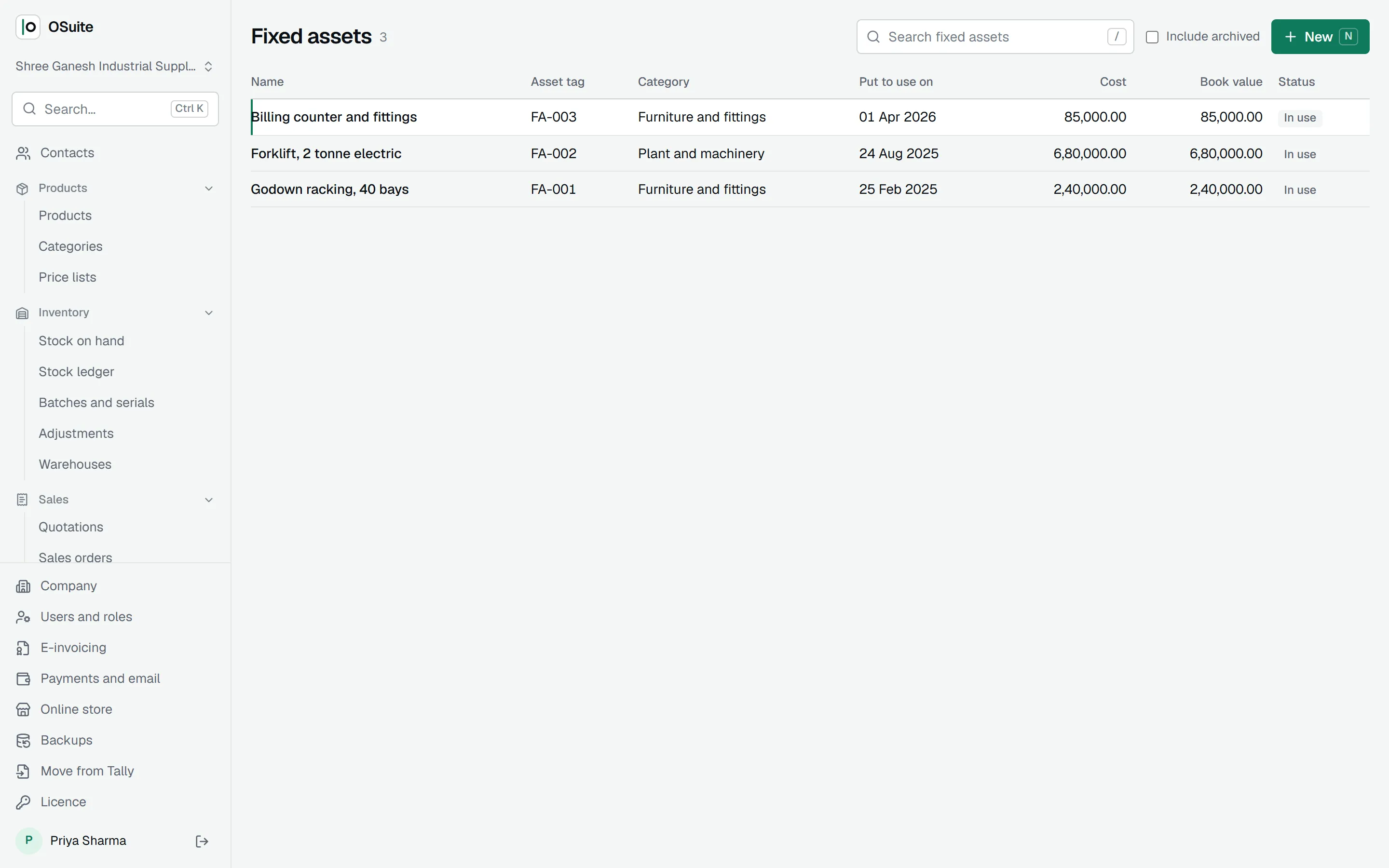
Assets that depreciate on their own.
Record machinery, furniture and computers with their cost; the rate comes from the Income-tax Act category, on written-down value or straight line. Depreciation for each completed year is booked on 31 March, and selling or scrapping an asset writes off what is left.
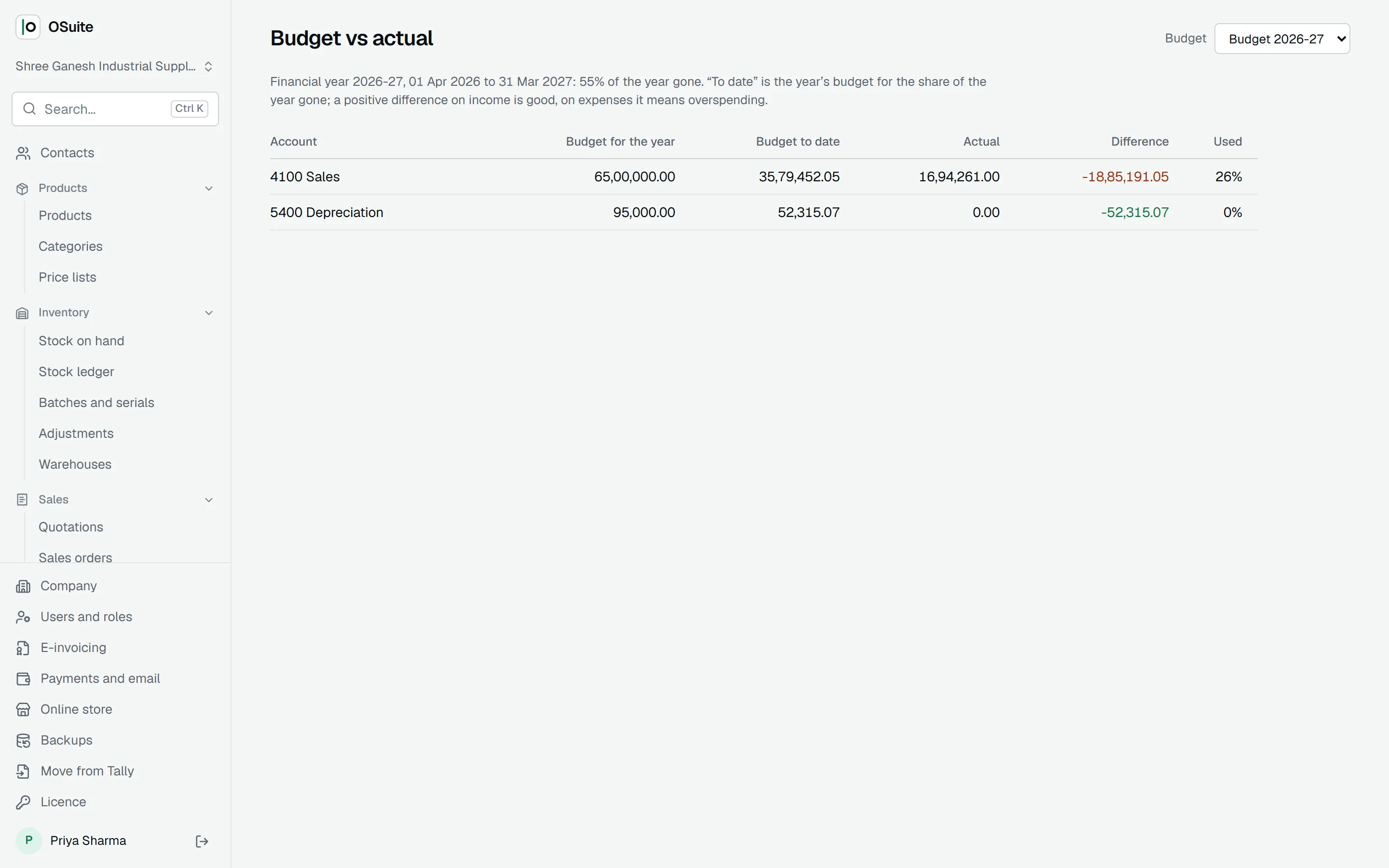
Budgets and the cash flow.
Set a budget for the year by account and see the actual beside the share of the budget for the months gone. The cash flow statement splits the year’s cash into operating, investing and financing, and agrees with the change in cash and bank.
More in OSuite
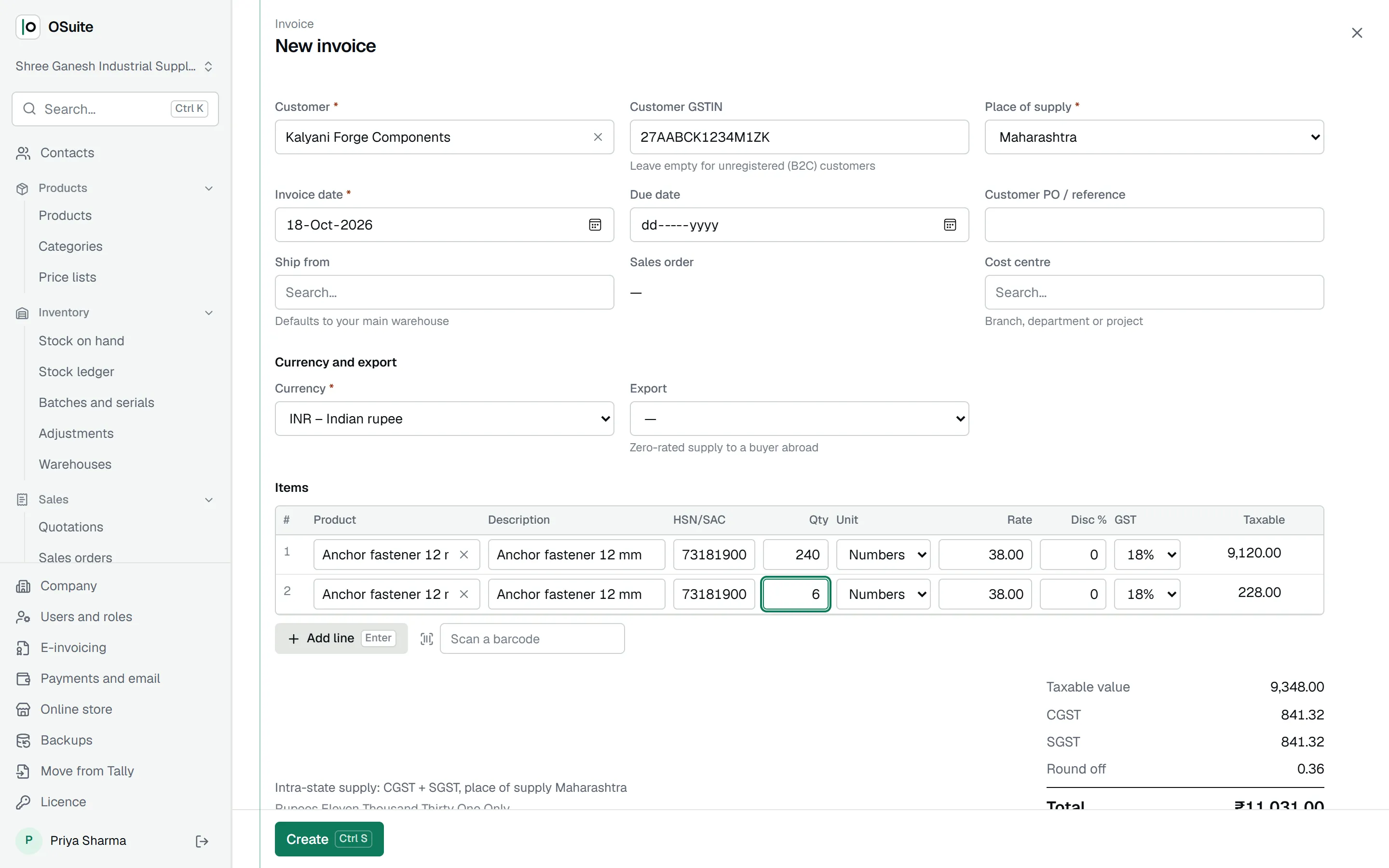
Invoicing and quotations
Tax invoices, quotations, proformas and credit notes, with GST worked out as you type.
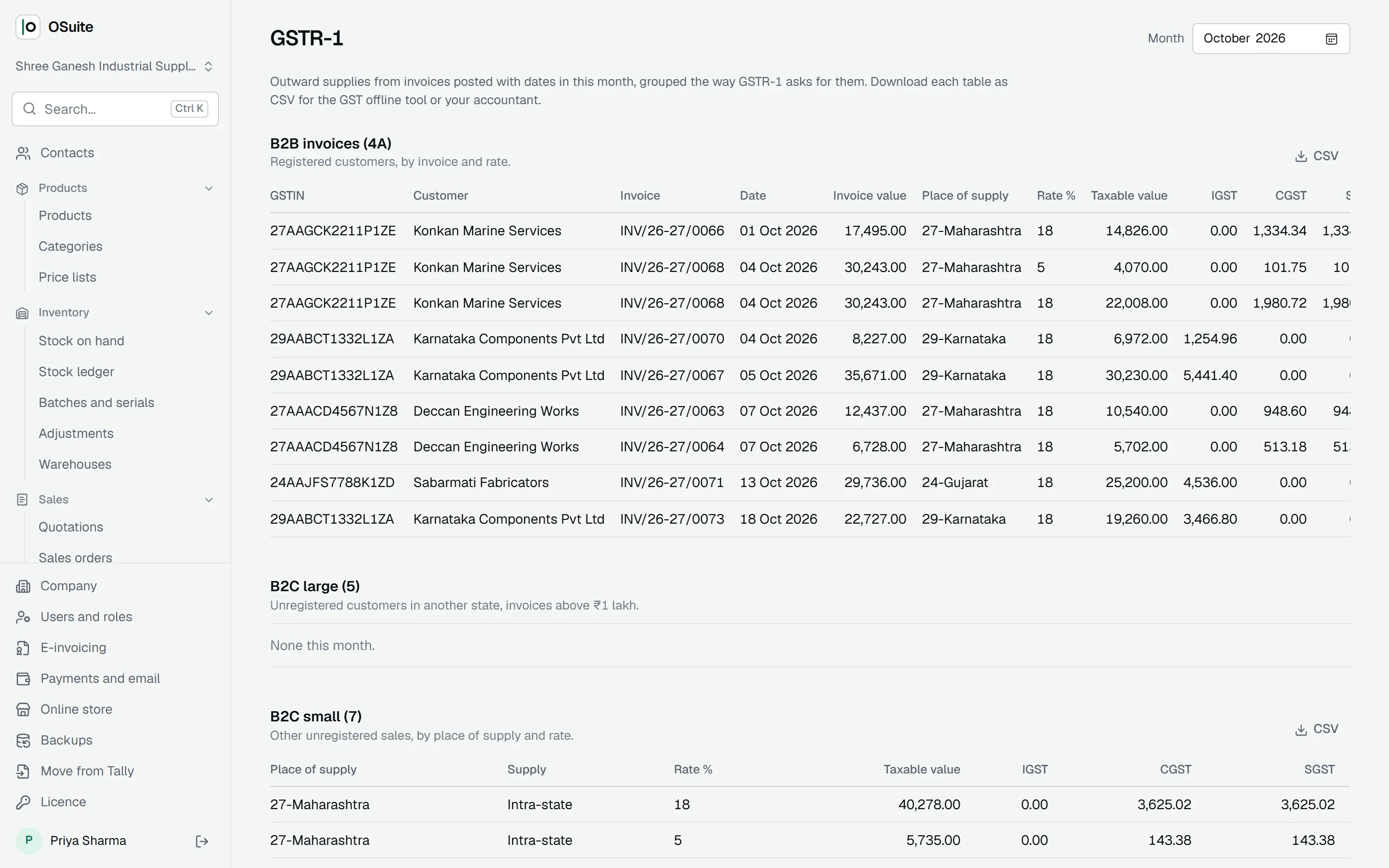
GST returns
GSTR-1 and GSTR-3B from your posted documents, GSTR-2B matched to your bills, and the GSTR-9 summary.
E-invoicing and e-way bills
E-invoice JSON in the IRP format, checked first; IRN and signed QR on the print; e-way bills from the IRN.